Insights
Cambridge Children’s: putting integrated care into practice
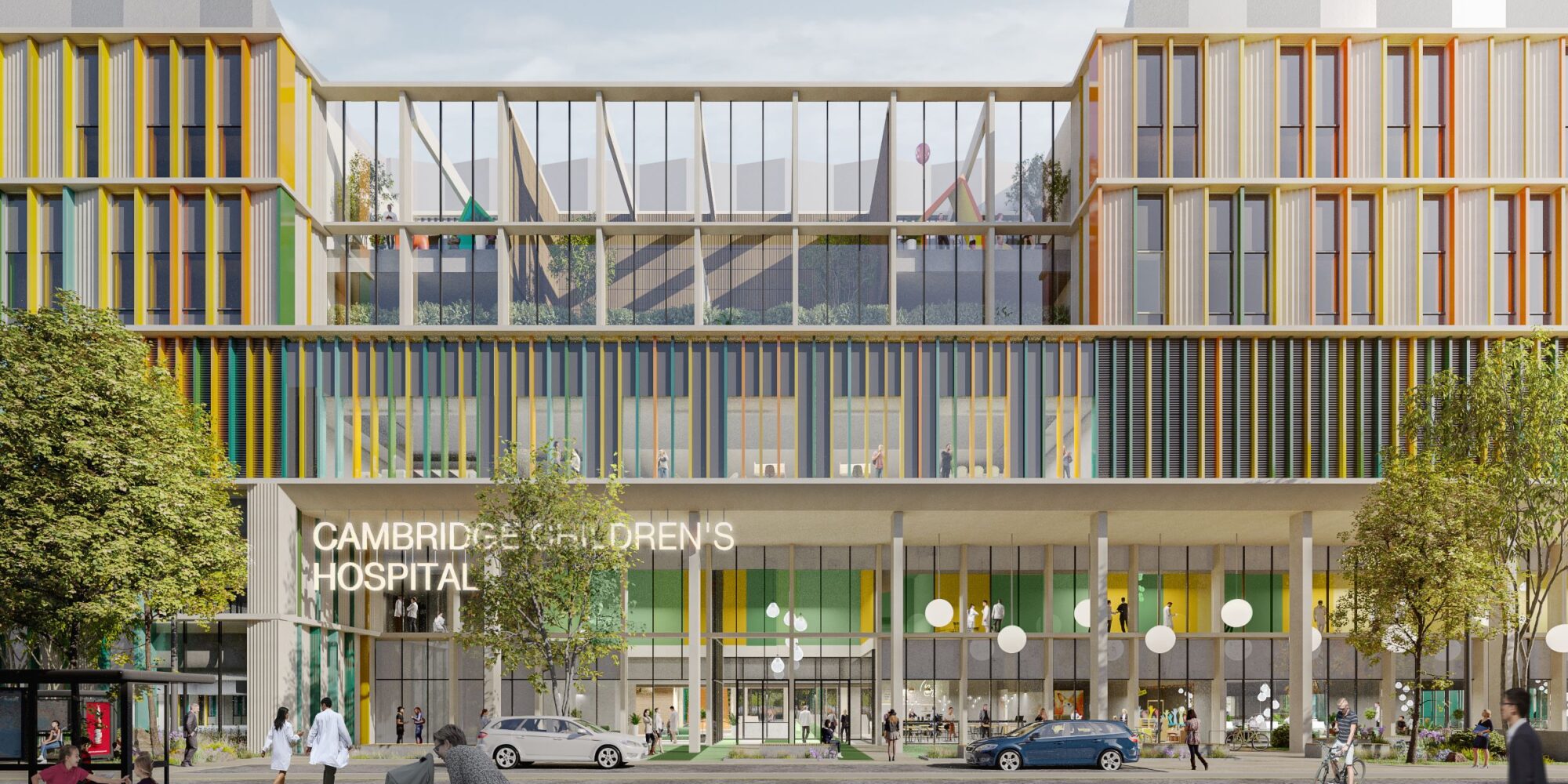
Integrating mental and physical healthcare is not a token ambition for Cambridge Children's Hospital, it drives every decision made
Last week, I had the opportunity to present the work Cambridge Children’s is doing to bring mental and physical healthcare together. Having helped develop the integrated model of care for children and young people, it was a pleasure to share the thinking behind it—and the practical questions that have shaped it.
The connection between mental and physical health is well understood, yet health systems around the world remain shaped by a historical separation between the two. For children, young people and their families, that divide can become part of the unraveling experience of being unwell. Bringing services together takes more than agreement that integration is a good idea: it means changing how care is planned, delivered and supported.
As part of the healthcare planning team, we’ve worked with clinical teams to explore what integration means in practice. Sharing a site, sharing care, and becoming fully integrated are different propositions. Each mean different things to the people providing care and each require different things from their healthcare environment. Framing each conversation around how teams will work together and how the building could support this has been game changing. It has result in stronger design solutions and has begun to foster joined-up thinking.
Supporting staff to work differently
A shared setting cannot, on its own, create a shared approach to care. For me, this is a central planning lesson: the workforce and the building must be considered together.
Staff need the skills to work in this way. Psychological literacy will be embedded in training and daily practice, alongside a consistent approach that is trauma-informed, developmentally appropriate and culturally sensitive.
Starting with the whole child
An integrated assessment of every child’s physical, psychological, social, developmental and family needs will be carried out at point-of-admission. A routine screening is intended to identify mental health needs early and enable timely intervention. But screening must lead somewhere: recognising a concern is only useful if it informs the care that follows. Therefore, mental and physical health will be given equal status in care decisions. This means looking beyond the immediate reason for admission to understand what else may be affecting a child and their recovery.
Support at different levels
Cambridge Children’s will provide targeted, specialist support to those who require it, while making psycho social help and wellbeing tools universally available to all patients and families. This recognises that families need different kinds of help, rather than treating specialist mental healthcare as the only response.
The practical question is how those levels connect. Families should not have to navigate separate services while managing the pressures of a child being unwell. Support should feel like part of their care and not something they must seek elsewhere.
Families as part of the care team
Families are core participants in care planning, delivery and recovery. The adopted approach calls for a shared understanding of each child’s needs, developed with families and the networks around them to guide treatment. It gives their knowledge of the child a clear place in clinical decisions.
With this in mind youth and family forums and parent advocates, and regional engagement has been key to the design, care pathways and operating models development process. Their contribution matters because integration must make sense to the people receiving care as well as those organising it.
Designing for integration, not just co-location
The inpatient design discussions made it clear that we must think about true integration, not just co-location. How could a ward support children who are medically unwell while also caring for those who may be distressed, at risk of self-harm or in need of a different environment? Simply placing services alongside one another would not answer those questions.
Discussions with patients led to an integrated ward approach using ‘universal rooms’ that were designed to accommodate physical and mental healthcare requirements. Cambridge Children’s design plan is for one ward to consist entirely of universal rooms. This is a specific design response based on the understanding that not every space in the hospital should meet every need.
It also highlights a difficult balance. Managing risk matters, but so does creating an environment that supports care. Safety measures need careful consideration to ensure they do not inadvertently heighten distress or make behaviour harder to manage.
For healthcare planners, this is where integration becomes a practical design task. We need to appreciate who a space is for, how it will be used, and what staff need to deliver care within it. A room described as universal still needs a clear purpose and a workable model of care behind it.
Looking beyond the hospital
Cambridge Children’s is planned as a regional hub for the East of England, with an ambition to treat young people as close to home as possible and connect with community and education services. That wider role matters: an integrated hospital should strengthen the care around a child, not create another boundary within it.
Integrated care leads to better outcomes
Cambridge Children believes its integrated care will lead to shorter stays, better school readiness and performance, and improved life trajectories for patients. These are aims, not outcomes we can yet claim. Having contributed to this work, I hope Cambridge Children’s continues to share the decisions and compromises as openly as the ambition. For healthcare planners, the real lesson is not simply why integration matters, but what it takes to make it work.
Kate Bradley – Associate Director
Kate leads the delivery of our healthcare planning services. She works with clients to determine the demand for healthcare they face, the best way for them to deliver care, and how their hospital should be designed and configured to facilitate great care effectively.
With over 20 years’ experience within the healthcare industry, Kate has managed a wide range of major capital development projects from the early concept stages to operational readiness and activation. Her expertise includes briefing and business case development, operational policies, capacity modelling and operational commissioning of premises and major medical equipment.