Insights
Building the future in Jersey: A blueprint for emergency care in the neighbourhood health era
By Dan Gibson
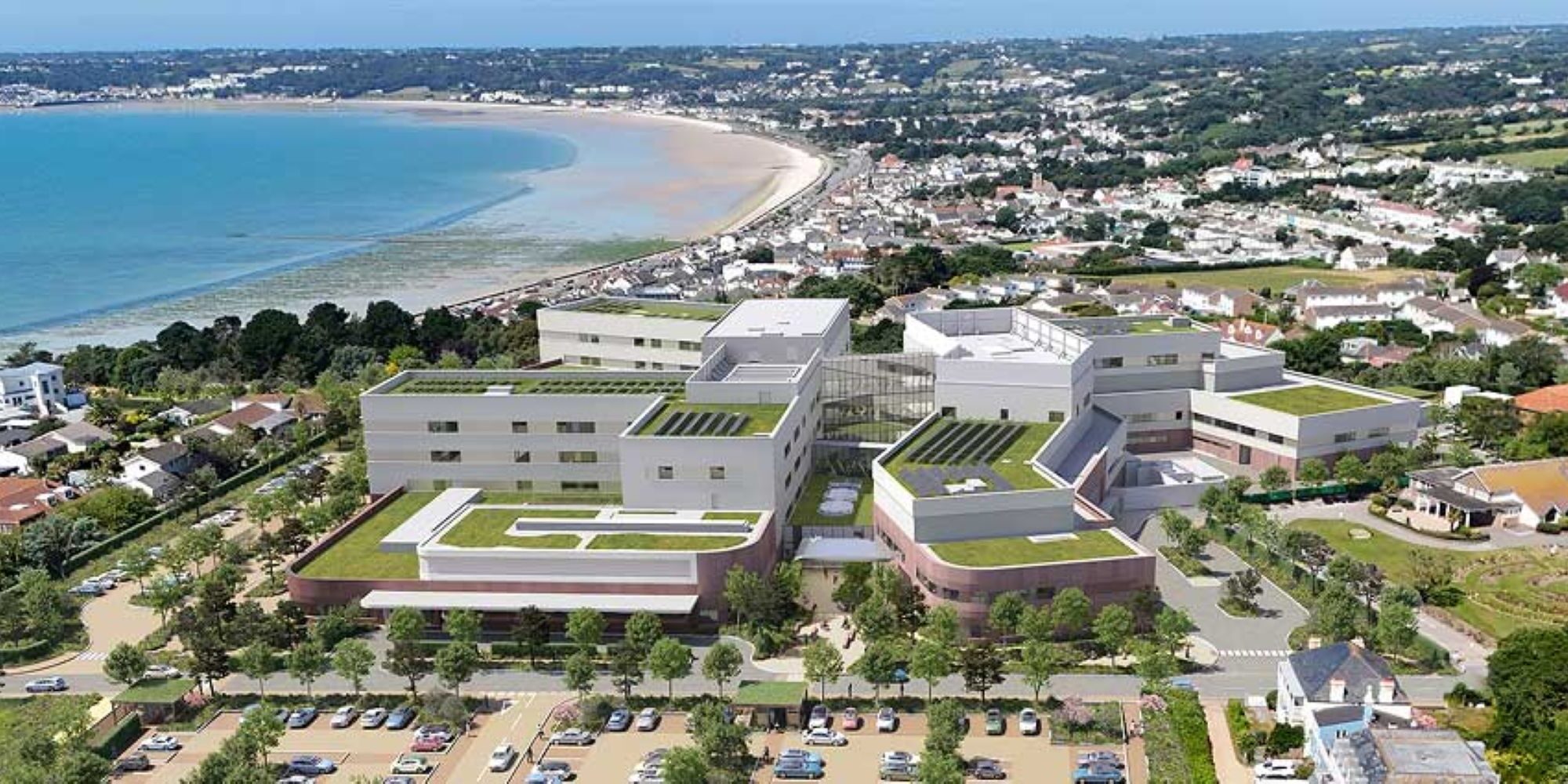
At the European Health Design Congress last week, Nigel Edwards set out his thinking around population health and on how hospitals must adapt to neighbourhood health models. Much of what he described resonated deeply with a project we have been closely involved in for the last 13 years. On the surface it might seem an unlikely reference point, but the New Healthcare Facilities Programme for Jersey shows how governments can reshape complicated, dated healthcare systems to work as they are needed today.
Jersey is a small island of just over 100,000 people, grappling with an ageing population, a mixed public/private funding model, and an acute hospital that is, by any measure, no longer fit for purpose. These constraints forced a clarity of thinking that feels increasingly relevant to the UK NHS debate.
Edwards argued that hospitals must stop being reactive institutions that admit patients whose conditions could have been managed upstream. Instead, they should become active partners in a system designed to keep people out of hospital where clinically appropriate. He cited compelling evidence that shows up to 34% of emergency admissions may be potentially mitigatable. He referenced analysis in Coventry and Warwickshire that suggested 38% of patients could avoid admission through improved front-door support.
Working closely with Jersey’s health minister, executive clinical leadership and stakeholders across the healthcare spectrum, the island’s New Healthcare Facilities Programme arrived at strikingly similar conclusions — and then did something about it, by overlaying a newly designed systemic model of care onto an island-wide health facilities master plan.
Taking emergency care as a specific example, the model of care underpinning Jersey’s new facilities makes a deliberate clinical choice to separate high acuity emergency care from minor injuries and urgent treatment. This isn’t operational convenience, it’s a structural commitment to a fundamentally different philosophy of care, one that starts with the patient pathway and works backwards to inform the location from which the service will be delivered. An urgent treatment centre, hosted by Health and Community Services (HCS) but explicitly connected to the primary care system, is designed to divert a meaningful proportion of emergency department activity away from the acute hospital front door and is located within the centre of the St Helier high street. Precisely the kind of front-door streaming Edwards identified as transformative.
The ambulatory care centre takes this further. By physically separating day procedures, outpatients, and long-term conditions pathways from the acute hospital, the model creates the conditions for what Edwards described as a “different response to patient need”, one where diagnostics, ambulatory pathways, and specialist input can flow without competing with emergency acuity pressures.
Jersey also confronted something Edwards was candid about; the financial and workforce structures that make change difficult. On an island with genuine recruitment and retention challenges, the government and HCS couldn’t rely on simply adding capacity. It had to redesign how services connect, including strengthening integration of physical and mental health, incorporating social care, out of hours GP care, and building robust tertiary pathways with UK partners at the same time as actively repatriating acute activity where clinically safe to do so.
What Jersey demonstrates is that the neighbourhood health ambition isn’t just a policy aspiration for large care systems on the mainland. The principles of separating care pathways, investing in front-door decision-making, building ambulatory infrastructure that relieves pressure on acute beds, and designing for discharge from the outset are universal.
Edwards was right to point out that this represents a significant leadership challenge, and that incentives to maintain the status quo remain strong. But Jersey, which like so many areas of the UK, is faced with a perfect storm of demographic pressure, ageing infrastructure, and fiscal constraint, had little choice but to redesign the system model of care from first principles. Constraints, it would seem, can be the mother of reinvention.

Dan Gibson – Director
With more than 30 years’ experience, Dan has advised on a wide range of healthcare projects across the UK, the Middle East and Africa. He continues to guide clients through the complexities associated with developing a considered model of care, deciding the most optimal design and creating a strong business case for their healthcare facility.
Dan advocates an evidence-based approach to healthcare facility design. An active contributor to clinical and medical technology research programmes, he’s a proponent for the future proofing of healthcare systems and buildings to make them more responsive to emerging trends in clinical best practice and medical technologies.